Minneapolis, MN.
Minneapolis-Saint Paul anchors the Upper Midwest's distribution network at the convergence of I-35, I-94, and the I-394 / I-494 / I-694 ring system. Mall of America freight, the Target HQ supply chain, the Mississippi River barge interchange at the Port of Saint Paul, and a dense FedEx / UPS / Amazon last-mile cluster make the Twin Cities one of the country's most weather-resilient freight environments, and -20°F winter snaps make it one of the harshest on equipment.
Every roadside service we run in Minneapolis
Featured Minneapolis Service Providers
Insurance-current network rescuers with verified compliance, equipment, and live availability status.
Minneapolis MN Freight Corridors & Interstate Service Coverage
Each corridor has a dedicated breakdown landing page with service zones, exits, and recent dispatched jobs.
Interstate 35W
14 exits in Minneapolis
The west-side north-south spine through downtown Minneapolis, splits from I-35 at Burnsville. The I-94 spaghetti-junction interchange and the Lake Street exit are the two highest-volume freight breakdown zones in the metro.
Interstate 94
18 exits in Minneapolis
East-west spine from Saint Paul through downtown Minneapolis to St Cloud and Fargo. The Lowry Hill Tunnel and the I-35W spaghetti-junction interchange anchor the most-congested freight stretch in the Twin Cities.
Interstate 394
8 exits in Minneapolis
Spur from I-94 west to the Hopkins / Minnetonka / Best Buy / UnitedHealth corridor. Heavy outbound corporate-fleet volume; service calls cluster at the Highway 100 interchange.
Interstate 494
26 exits in Minneapolis
Southern beltway from Plymouth through Edina, Bloomington, and Mall of America to Maplewood. Heaviest service-call clusters at the Mall of America exit and the I-35W south interchange.
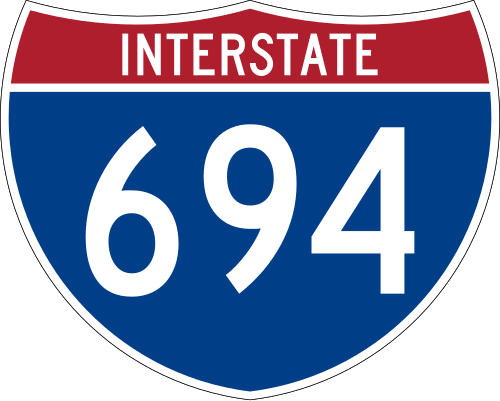
Interstate 694
22 exits in Minneapolis
Northern beltway from Brooklyn Park through Roseville to Oakdale. Major freight bypass connecting I-35W, I-35E, I-94, and US-10; common breakdown zones at the I-35W and I-35E splits.
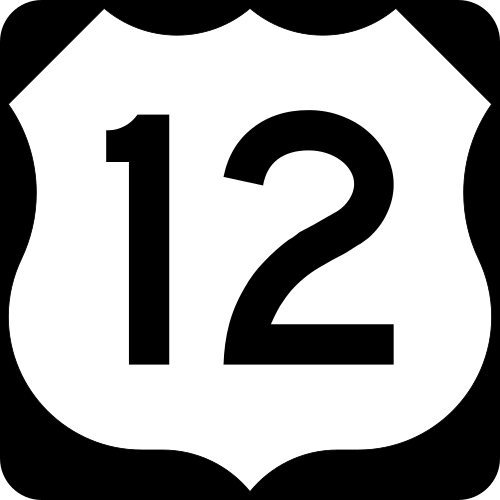
US Route 12
11 exits in Minneapolis
Surface freight artery from downtown west through Wayzata to Long Lake. High volume of last-mile and corporate-campus freight; serves the Lake Minnetonka logistics cluster.
Minneapolis MN Trucking & Freight Industry Overview
Minneapolis-Saint Paul anchors the Upper Midwest's distribution network at the convergence of I-35, I-94, and the I-394 / I-494 / I-694 ring system. Mall of America freight, the Target HQ supply chain, the Mississippi River barge interchange at the Port of Saint Paul, and a dense FedEx / UPS / Amazon last-mile cluster make the Twin Cities one of the country's most weather-resilient freight environments, and -20°F winter snaps make it one of the harshest on equipment.
Minneapolis is a city in Hennepin County, Minnesota, United States, and its county seat. With a population of 429,954 as of the 2020 census, it is the state's most populous city. Located in the state's center near the eastern border, it occupies both banks of the Upper Mississippi River and adjoins Saint Paul, the state capital of Minnesota. Minneapolis, Saint Paul, and the surrounding area are collectively known as the Twin Cities, a metropolitan area with 3.69 million residents. Minneapolis is built on an artesian aquifer on relatively flat terrain and is known for cold, snowy winters and hot, humid summers. Nicknamed the "City of Lakes", Minneapolis is abundant in water, with thirteen lakes, wetlands, the Mississippi River, creeks, and waterfalls. The city's public park system is connected by the Grand Rounds National Scenic Byway.
Twin Cities winters are an equipment crisis hidden behind cheerful weather-app icons. Below -10°F, Class 8 air systems freeze in minutes if methanol injection isn't running, batteries that test fine at +20°F die under cranking load, and DEF lines crystallize causing instant derate. Road Rescue Network's Minneapolis rescuers carry methanol-injection kits, 24V cold-spec battery packs, DEF-line thaw blankets, and air-dryer rebuild parts as default loadout from October through April.
Anyone who has dispatched a truck through the Twin Cities at rush hour knows the I-35W / I-94 spaghetti junction. Three interchanges within 1.5 miles route 250,000+ vehicles a day past downtown, and a breakdown anywhere on that stretch cascades into 90-minute backups. Our network is built around mechanics staged at the I-35W / I-94 / I-394 commons, with response times under 28 minutes to anywhere in the downtown box.
Whether you are a fleet manager dispatching from Atlanta with a reefer stranded at the Mall of America loading dock, or an owner-operator on I-35 inbound from Iowa, the closest verified, insurance-current rescuer in our Minneapolis network is reached through a single phone call or service request. Our 24/7 dispatch desk handles ETA confirmation, MSP coordination on the corridors, and direct hand-off to the responding tech.